Te Kākano Leadership Institute Kaiwhakatō (Director) Dr Hirini Kaa shares his understanding of the image of the Kākano (seed) and its meaning for leadership.
Ki Tetahi Tangata Kai-Ngakau / To a Sensitive Person
Tena pea ka tu mai koe,
hei kai-whakato
i te kakano whai hua,
whai wahi hoki,
i roto i te ao —
hurihuri nei, e patu nei,
i te manawa tangata.
Perhaps you will become
a sower of seeds
that yield abundance,
and have a place
in this world – of –
turmoil, that pains
the heart of humanity.
Arapera Hineira Kaa Blank
From ‘Nga Kokako Huataratara’
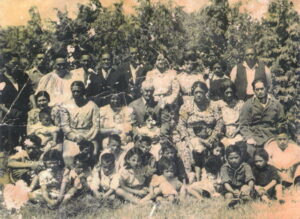
Kaa whanau 1948
I grew up in the shadow of gardens. I grew up in the shadow of an immense culture. In some ways now I live amidst the ghosts of those gardens and of that culture.
My father and his siblings grew up in the māra (the garden). They would spend six and a half days a week in those gardens, doing the endless weeding, planting, digging and nurturing that was required. School was their only real reprieve from the endless backbreaking toil. And Sunday mornings in Church.
But the māra wasn’t only a place of work, it was also a place of learning. As they worked their parents would fill them with stories and songs of their ancestors. They would learn whakapapa, moteatea, waiata and haka.
As children of the urban exodus we grew up on stories of these stories, of this learning in the māra. Dad used to sing a song to us which included: “have you ever seen a horse do a hula in the gorse, down where the kamokamo grow!”
My Aunt Arapera, Dad’s older sister, was a product of those gardens. And from there her and her siblings guided by their parents developed a shared creativity which I still marvel at today. Her poem above is a slice of that mātauranga (worldview).
And at the heart of these gardens, and of this creativity, were seeds.
But the māra wasn’t only a place of work, it was also a place of learning. As they worked their parents would fill them with stories and songs of their ancestors. They would learn whakapapa, moteatea, waiata and haka.
Te Mātauranga-a-Ngāti Porou | The Seed of Ancestral Knowledge
For us as Ngāti Porou, the kūmara has immense symbolic value, as the sign of peace and life. It is tied to the atua Rongo-mā-Tāne, who represents peace. My father understood that Rongo-mā-Tāne was female because she represents nurture for humanity.
In the primeval period of the creation of earth and sky she remained hidden within the breast of her mother Papatuanuku until discovered by her brothers in their search for sustenance. The precondition for kūmara to grow is peace, lest the vines and seedlings be trampled in war.
The kūmara tipu (seedlings) were nurtured in a space my people call Te Whakaika. This naming is unique to my people and our rohe, at the river mouth of the Waiapu River. The name Te Whakaika brings together the kumara and the kahawai fish.
When the star cluster Mataariki is visible in the month of June, the whakaika is prepared for the kūmara seed. Off the coast of Rangitukia, near the mouth of the Waiapu river, at this time of the year a rock protrudes out of the water. This rock catches the reflection of the moon and is another sign that the time is right to set the whakaika. The preparation and the signs of the rock and the appearance of Mataariki coincide with the migration of the kahawai from the northern reaches of the Pacific. The kahawai reach the mouth of the Waiapu river around about the months of September-October. When the kahawai appears the kūmara tipu are now ready. The tipu are then transferred to the māra or garden.
This is our ancient, ancestral knowledge handed down through the generations. The seed is planted, and the people flourish.
Te Tino Waere Ataahua | The Seed of Faith
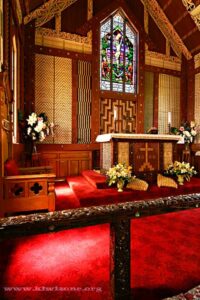
St Marys Church Tikitiki
And other seeds had also been planted.
It was at Rangitukia where our ancestor Paikea (the whale rider) asked of Huturangi ‘Where is everyone?’, to which she replied ‘They are at Ngāpuketurua planting the sacred kumara for Tama’. Paikea said ‘Come let us go together’ to which she replied again ‘Yes but the pathways are sacred’. To which Paikea replied ‘All is well I will clear the way.’
The kūmara is the sacred food which embodies the signs of peace and life. It is the gift that Ngāti Porou speaks of in poetic terms as ‘ko taku kūmara hai wai-ū mō Tama / my kūmara is as mother’s milk for the child’. The arrival of Paikea is seen as an added blessing on the kūmara. Paikea recognised that he was the Tama and that the kūmara was nurture for him.
My grandfather quotes this story in a haka he composed in 1964, to commemorate the arrival of another seed, Te Purapura Pai – the good seed – a metaphor for the Gospel. The haka was commemorating the event in 1834 when Piripi Taumataakura returned from captivity in the North and brought the Gospel to my people.
My grandfather equated the arrival of Paikea and his “clearing the way” to the arrival of the Gospel, which he called ‘Te tino waere ataahua’ the New Way, or the Beautiful Way.
For my whānau the Gospel is like the kūmara. It was planted by our ancestors. My grandfather, in that pōwhiri sees the arrival of Taumatākura with the seed of the Gospel as a similar event. The kūmara thus becomes nurture for the new Tama, Jesus Christ.
My grandfather equated the arrival of Paikea and his “clearing the way” to the arrival of the Gospel, which he called ‘Te tino waere ataahua’ the New Way, or the Beautiful Way.
As my father wrote:
“To be partially human is to be uncertain as to who you are. To be fully human establishes that certainty. In my own instance I know who I am as Ngāti Porou. It is in this ‘knowing’ that I activate my inherent potential to relate to my world of Ngāti Porou and other Māori in a way that makes sense to me as a Māori. I am, because of that ‘knowing’, able to identify myself as being both Māori and Christian.”[1]
He also quotes Audre Lorde
“We need to know’ that survival is not an academic skill. It is learning how to stand alone, unpopular and sometimes reviled, and how to make common cause with those others identified as `outside’ the structures in order to define and seek a world in which we can all flourish. It is learning how to take our differences and make them strengths”[2]
This Gospel seed is a crucial component of my identity. It is vital that we understand the seed of our leadership.
Te Purapura Pai | The Seed of the Bible
Seeds and gardens are a dominant narrative in the ancient wisdom of the Bible. And the Bible continues to be highly influential on our thinking as a society, both as Māori and in the West in general as well.[3]
The Garden of Eden is predominant in the Biblical creation story, and speaks to the image of a perfect creation, and therefore of a perfect life and by extension, society.
Many of the Hebrew Bible prophets speaks of gardens as images of growth and flourishing, and effectively of what good looks like. The interconnectedness of land, water, plants and people come together in images of flourishing, particularly as describing hope to a people either in exile or recently coming out of exilic trauma.[4] Our Tīpuna (ancestors) saw many reflections of our own creation immediately in this story.
Jesus comes from this culture and grounds his own korero in these pūrākau (ancestral stories) of his people. He uses the parable of the sower[5] to describe the conditions necessary for flourishing, and the obstacles to that growth. And he describes that growth as being ‘what was sown on good soil, this is the one who hears the word and understands it, who indeed bears fruit’.
Jesus parable of the mustard seed to describe the Kingdom of God is one where something seemingly insignificant, even marginalised, grows into something that can enable not only itself to flourish, but everything around it.
Paul, as the first interpreter and philosopher of Christian thought writes of planting and nurturing and flourishing in 1 Corinthians 3:
‘What then is Apollos? What is Paul? Servants through whom you came to believe, as the Lord assigned to each. 6 I planted, Apollos watered, but God gave the growth. 7 So neither the one who plants nor the one who waters is anything, but only God who gives the growth. 8 The one who plants and the one who waters have one purpose, and each will receive wages according to their own labour. 9 For we are God’s coworkers, working together; you are God’s field, God’s building.
The challenge here is to understand where the growth comes from, and once that is understood to keep upholding that as a core value as that leadership is expressed. If the kaupapa (cause) is from God, then the mātauranga is to nurture and water that mercy with compassion and love and justice, and leave whatever growth in whatever form, to God. To be consistent with the values that provided the seed in the first place, and to trust those values, and to give oneself to the kaupapa.
Seed and leadership in Scripture are interlinked.
Te Moemoeā | The Vision of the Seed
I was raised in a deeply spiritual whānau. We not only had a very strong Anglican/Christian faith and practice, but also a deep “Māori” spirituality. We acknowledge Tangaroa – the atua of the sea – by offering to her our first catch. We have kaitiaki: guardian spirits who take the form of nature. We know of taniwha and live tapu (sacredness) and the darkness and light of our spirituality.
Moemoeā (visions and dreams) are a manifestation of this spirituality. My grandmother was very gifted in these ways, as are others in our whānau across generations. We accept these gifts as entirely natural, and essentially a regular dimension of creation. Mātauranga Māori is much more than mere language acquisition – it is this at its depth. As a Christian whānau we understand that these dreams are a gift from God, being from Te Wāhi Ngaro – from the beyond.
Due to this, my focus on Te Kākano has recently gained a new meaning. I was recently gifted a vision by a matakite, meaning a prophet or seer. This vision included the images of our Māori and indigenous leadership being unsettled, and of planting seeds in a ruin. That ruin could be the Church, but also many of our Māori institutions – whether iwi, organisations or even whānau. This vision of replanting and renewal is compelling to me and leads me back to this image of Te Kākano as a crucial dimension of leadership.
This vision of replanting and renewal is compelling to me and leads me back to this image of Te Kākano as a crucial dimension of leadership.
Te Kākano | The Seed of Leadership

My Family
The image of the seed is crucial for understanding leadership. It is the foundation, the birthplace, the ukaipō (place of nurture) and tūrangawaewae (place of standing) of leadership. It is an ancient image. That fact alone gives it great worth, as it has survived generations of testing and been found worthy.
From the seed comes its expression. And understanding the seed means understanding the nature of that which grows from it. Leadership is the seed. And the seed is Te Kākano.
I finish with a blessing written by my father, inspired by his wānanga whilst labouring in Te Whakaika:
| E rere e nga Karere a Te Karaiti,
Kawea te kupu ki te tini ki te mano. Ruia i runga i te whakaaro nui, Ruia i runga i te whakaaro pono.
Waiho ko te aroha o te Atua, Matua, Tama, Wairua Tapu, hai kākahukiwi mō tātau, āianei, ā āke tonu atu. Āmine. |
Take wing o messengers of Christ
Proclaim the Good News to the masses Sow it in wisdom Sow it in truth
And may the love of God Creator, Redeemer, Giver of Life Be your chiefly feathered cloak Now and always. Amen |
Dr Hirini Kaa
Te Kaiwhakatō (Director), Te Kākano Leadership Institute
September 2025
[1] Hone Te Kauru o Te Rangi Kaa, Te Whakaika | The Seedbed, Thesis (MA, Education), University of Auckland, 2000, p.41.
[2] Lorde, Audre, Sister Outsider: Essays and Speeches, Crossing Press, CA, 1998, p.112.
[3] See for example Tom Holland, Dominion: The Making of the Western Mind, (2020) or Hirini Kaa, Te Hāhi Mihinare, (2020)
by (Author)
[4] Isaiah, Jeremiah, Ezekiel
[5] Matthew 13